• Home
  • About
    • Our team
    • Our member companies
    • Our corporate Alliance Partners
    • Our affiliations
    • Join
    • FAQs
  • Work Program
    • Country / Regional Focus >
      • ASEAN
      • Central Asia >
        • India
      • Dominican Republic
      • Laos
      • Panama
      • Pakistan
      • Philippines
      • South Africa
      • Trinidad and Tobago
      • Turkey
    • The Societal Costs of Illicit Trade >
      • Corruption and Illicit Trade >
        • Launch event | Money Talks: The Crooked Connection Between Corruption and Illicit Trade
      • The Human Cost of Illicit Trade
      • Link Between Illicit Trade and Sovereign Credit Ratings
      • Illicit Trade and the UNSDGs
    • Illicit Trade Index
    • Fraudulent Advertising Online
    • Illicit Trade Summit Americas
    • Small Parcels
    • Tackling the sale of illicit pesticides on e-commerce platforms
    • Ethanol Control Toolkit
    • Supply Chain Vulnerabilities to Illicit Trade
  • Sectors
    • Agri-food industry
    • Alcohol
    • Counterfeiting & Piracy
    • Cultural Property
    • Fisheries
    • Forced labor
    • Forestry
    • Pesticides
    • Petroleum
    • Pharmaceuticals
    • Precious metals and gemstones
    • Tobacco
    • Wildlife
  • Resources
    • Illegal Empire Campaign
    • TRACIT Talking Points
    • Videos
    • Events
    • News
    • Publications
  • Contact
Transnational Alliance to Combat Illicit Trade
  • Home
  • About
    • Our team
    • Our member companies
    • Our corporate Alliance Partners
    • Our affiliations
    • Join
    • FAQs
  • Work Program
    • Country / Regional Focus >
      • ASEAN
      • Central Asia >
        • India
      • Dominican Republic
      • Laos
      • Panama
      • Pakistan
      • Philippines
      • South Africa
      • Trinidad and Tobago
      • Turkey
    • The Societal Costs of Illicit Trade >
      • Corruption and Illicit Trade >
        • Launch event | Money Talks: The Crooked Connection Between Corruption and Illicit Trade
      • The Human Cost of Illicit Trade
      • Link Between Illicit Trade and Sovereign Credit Ratings
      • Illicit Trade and the UNSDGs
    • Illicit Trade Index
    • Fraudulent Advertising Online
    • Illicit Trade Summit Americas
    • Small Parcels
    • Tackling the sale of illicit pesticides on e-commerce platforms
    • Ethanol Control Toolkit
    • Supply Chain Vulnerabilities to Illicit Trade
  • Sectors
    • Agri-food industry
    • Alcohol
    • Counterfeiting & Piracy
    • Cultural Property
    • Fisheries
    • Forced labor
    • Forestry
    • Pesticides
    • Petroleum
    • Pharmaceuticals
    • Precious metals and gemstones
    • Tobacco
    • Wildlife
  • Resources
    • Illegal Empire Campaign
    • TRACIT Talking Points
    • Videos
    • Events
    • News
    • Publications
  • Contact

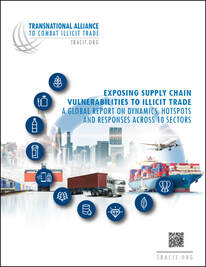
​KEY FINDINGS 

​​Supply chain hotspot: Free Trade Zones​

​Free Trade Zones (FTZs) are special areas established within a country’s national territory to boost legitimate trade and attract foreign investment. However, as this report confirms, FTZs are also direct facilitators of illicit trade in most of the sectors under review. In particular, criminal groups are known to exploit FTZs for the production, storage, sale, transit and transshipment of illegal and illicitly traded goods. Of particular concern is the widespread misconception that FTZs are “law-free zones.”

The present study identified three primary types of vulnerabilities in FTZs common to all the sectors under review:
  • Exploitation of transshipment procedures. The misuse of transshipment points in cargo routings, especially through FTZs, represents a significant challenge to combating illicit trade. In practice, illicit operations in FTZs can include assembly, manufacturing, processing, warehousing, re-packaging, and re-labelling to deliberately bypass sanctions, disguise identities, the country of origin or the illicit nature of the goods in question. Once these processes have been completed, the goods are ready to be imported directly to the national territory of the hosting state or re-exported to another FTZ, where the process is repeated.
  • Lack of clarity in the scope of regulations that cover customs controls in FTZs. In some cases, it is not clear if governmental authorities have jurisdiction to exercise customs controls in FTZs. Weak procedures may be in place for the purpose of inspecting cargo. The regulatory opacity affecting many FTZs, compounded by a general “hands-off” attitude on the part of customs and other law enforcement authorities, offers an attractive playground for unscrupulous actors to engage in illicit trade for a variety of goods.
  • Lax law enforcement attitude and lack of resources. Given the extremely high volumes of shipments often processed in FTZs, one serious vulnerability is inefficient cargo inspection, often due to shortages of human resources. Interviewed sources explained that large-scale traffickers often abuse FTZs because controls are looser than in other transit ports. In addition, when cargoes are seized, customs authorities have reported that prosecuting illicit trade offences in those zones is less likely to occur. This tendency has been confirmed in relation to FTZs in different regions, including Asia-Pacific, Middle East, and Latin America.   
The section on FTZs includes case studies revealing how they facilitate illegal activities, like tobacco smuggling in Panama's Colon FTZ, counterfeit pharmaceutical distribution from Dubai to the Bahamas, and the illicit wildlife trade in Laos' Golden Triangle SEZ.
​

Featured Report

Picture
Illicit Trade in Free Trade Zones – Focus on Central and South America
TRACIT's latest report shines a spotlight on how Free Trade Zones (FTZs) in Central and South America are being misused to facilitate illicit trade. With a focus on five key zones—Aruba, Belize, Chile, Curaçao, and Panama—the report identifies regulatory loopholes, weak enforcement, and lack of transparency as major vulnerabilities. It also offers concrete policy recommendations to help governments and zone authorities close these gaps and restore integrity to legitimate trade. 

Illicit Trade in Free Trade Zones – Focus on Central and South America
​

El comercio ilícito en las zonas francas: Un enfoque en cinco zonas clave de América Central y del Sur [Versión en español]

DOWNLOAD REPORTS
Picture

Picture
About
Work Program
Contact
Terms of Use
Join Us

Transnational Alliance to Combat Illicit Trade (TRACIT) is an independent, non-governmental, not-for-profit organisation under US tax code 501(c)(6).
​
© COPYRIGHT 2025. ALL RIGHTS RESERVED.
Follow us
  • Home
  • About
    • Our team
    • Our member companies
    • Our corporate Alliance Partners
    • Our affiliations
    • Join
    • FAQs
  • Work Program
    • Country / Regional Focus >
      • ASEAN
      • Central Asia >
        • India
      • Dominican Republic
      • Laos
      • Panama
      • Pakistan
      • Philippines
      • South Africa
      • Trinidad and Tobago
      • Turkey
    • The Societal Costs of Illicit Trade >
      • Corruption and Illicit Trade >
        • Launch event | Money Talks: The Crooked Connection Between Corruption and Illicit Trade
      • The Human Cost of Illicit Trade
      • Link Between Illicit Trade and Sovereign Credit Ratings
      • Illicit Trade and the UNSDGs
    • Illicit Trade Index
    • Fraudulent Advertising Online
    • Illicit Trade Summit Americas
    • Small Parcels
    • Tackling the sale of illicit pesticides on e-commerce platforms
    • Ethanol Control Toolkit
    • Supply Chain Vulnerabilities to Illicit Trade
  • Sectors
    • Agri-food industry
    • Alcohol
    • Counterfeiting & Piracy
    • Cultural Property
    • Fisheries
    • Forced labor
    • Forestry
    • Pesticides
    • Petroleum
    • Pharmaceuticals
    • Precious metals and gemstones
    • Tobacco
    • Wildlife
  • Resources
    • Illegal Empire Campaign
    • TRACIT Talking Points
    • Videos
    • Events
    • News
    • Publications
  • Contact