• Home
  • About
    • Our team
    • Our member companies
    • Our corporate Alliance Partners
    • Our affiliations
    • Join
    • FAQs
  • Work Program
    • Country / Regional Focus >
      • ASEAN
      • Central Asia >
        • India
      • Dominican Republic
      • Laos
      • Panama
      • Pakistan
      • Philippines
      • South Africa
      • Trinidad and Tobago
      • Turkey
    • The Societal Costs of Illicit Trade >
      • Corruption and Illicit Trade >
        • Launch event | Money Talks: The Crooked Connection Between Corruption and Illicit Trade
      • The Human Cost of Illicit Trade
      • Link Between Illicit Trade and Sovereign Credit Ratings
      • Illicit Trade and the UNSDGs
    • Illicit Trade Index
    • Fraudulent Advertising Online
    • Illicit Trade Summit Americas
    • Small Parcels
    • Tackling the sale of illicit pesticides on e-commerce platforms
    • Ethanol Control Toolkit
    • Supply Chain Vulnerabilities to Illicit Trade
  • Sectors
    • Agri-food industry
    • Alcohol
    • Counterfeiting & Piracy
    • Cultural Property
    • Fisheries
    • Forced labor
    • Forestry
    • Pesticides
    • Petroleum
    • Pharmaceuticals
    • Precious metals and gemstones
    • Tobacco
    • Wildlife
  • Resources
    • Illegal Empire Campaign
    • TRACIT Talking Points
    • Videos
    • Events
    • News
    • Publications
  • Contact
Transnational Alliance to Combat Illicit Trade
  • Home
  • About
    • Our team
    • Our member companies
    • Our corporate Alliance Partners
    • Our affiliations
    • Join
    • FAQs
  • Work Program
    • Country / Regional Focus >
      • ASEAN
      • Central Asia >
        • India
      • Dominican Republic
      • Laos
      • Panama
      • Pakistan
      • Philippines
      • South Africa
      • Trinidad and Tobago
      • Turkey
    • The Societal Costs of Illicit Trade >
      • Corruption and Illicit Trade >
        • Launch event | Money Talks: The Crooked Connection Between Corruption and Illicit Trade
      • The Human Cost of Illicit Trade
      • Link Between Illicit Trade and Sovereign Credit Ratings
      • Illicit Trade and the UNSDGs
    • Illicit Trade Index
    • Fraudulent Advertising Online
    • Illicit Trade Summit Americas
    • Small Parcels
    • Tackling the sale of illicit pesticides on e-commerce platforms
    • Ethanol Control Toolkit
    • Supply Chain Vulnerabilities to Illicit Trade
  • Sectors
    • Agri-food industry
    • Alcohol
    • Counterfeiting & Piracy
    • Cultural Property
    • Fisheries
    • Forced labor
    • Forestry
    • Pesticides
    • Petroleum
    • Pharmaceuticals
    • Precious metals and gemstones
    • Tobacco
    • Wildlife
  • Resources
    • Illegal Empire Campaign
    • TRACIT Talking Points
    • Videos
    • Events
    • News
    • Publications
  • Contact

Ethanol Control Toolkit

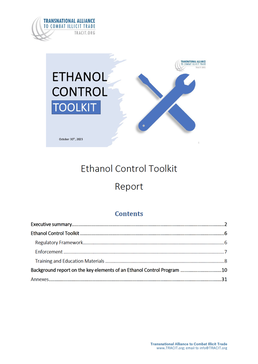
​To safeguard public health and reduce the risks associated with illicit alcohol, governments enact and enforce strict laws and regulations governing the trade of ethanol to prevent its diversion for illegal or unauthorized purposes. The most successful ethanol control strategies employ a three-pillar approach, encompassing the creation, implementation, and vigilant monitoring of ethanol control measures.

The Ethanol Control Toolkit promotes the use of ethanol control programs as an effective measure for mitigating the production of illicit alcoholic beverages, disrupting illicit alcohol networks and protecting public health. 
​

It delineates a 3-pillar approach to creating, implementing and monitoring an ethanol control program. It includes an Ethanol Control Checklist, designed for use by legislators and regulatory agencies to implement or fortify ethanol control systems. In cases where legislation governing ethanol controls is absent, the Background Report provides an adequate basis for drafting and introducing new, enabling legislation. 

Pillar 1) Regulatory framework 
  • International: Successful ethanol control strategies include robust legislative and regulatory frameworks that govern the ethanol supply chain, including the regulation and monitoring of ethanol importation.
  • Domestic: Once introduced into the market, either by import or domestic production, regulations should establish robust tracking and regulatory mechanisms to foster transparency and accountability in the ethanol supply chain. These measures include stringent record-keeping requirements, such as the quantity, source, destination, and purpose of ethanol shipments, robust license / permit requirements for all businesses or individuals trading in ethanol.
  • Product regulation: An important complement to this system is the introduction and enforcement of a comprehensive denaturing program and labeling mandates. By rendering industrial ethanol unsuitable for human consumption, denaturing is a powerful deterrent to those attempting to illegally divert untaxed ethanol supplies to beverage markets. A denaturing program also helps to ensure compliance with regulatory standards and safeguards tax revenues.
Pillar 2) Enforcement 
  • International: Effective ethanol control programs employ a range of enforcement measures to monitor borders to detect, intercept, and deter smuggled or non-compliant ethanol. Customs and regulatory frontline agencies must be equipped and trained to verify the authenticity and compliance of ethanol, including the level and type of denaturant.
  • Domestic: Regulatory bodies and enforcement agencies play a vital role in ensuring that processes are carried out correctly and in accordance with the law. Effective interagency collaboration and information sharing among the different agencies involved in oversight of ethanol control regulations are critical to oversee compliance and prevent irregularities. Additionally, through the rigorous enforcement of these regulations, governments can substantially enhance their tax revenues by efficiently preventing tax evasion and revenue leakage.
  • Penalties: Strict penalties for violations of regulations should also be consistently enforced, acting as both a deterrent and a measure underlining the government's commitment to upholding the integrity of ethanol control measures. 
Pillar 3) Training and awareness
  • Stakeholder engagement: Once the regulatory framework and enforcement regime are firmly established, their ongoing effectiveness needs to be sustained. The establishment of a permanent ethanol control dialogue between government, key producers and affected parties ensures the continuous improvement and alignment of regulatory practices, fostering a more robust and cooperative approach to ethanol control for the benefit of public safety and industry integrity. This collaborative approach ensures that both regulatory and industry perspectives are considered, enhancing the overall effectiveness of the framework.
  • Education and awareness: The sustainability of an effective ethanol control program hinges on the ongoing implementation of training and awareness initiatives. These efforts are aimed at educating enforcement agencies, industry stakeholders, and consumers about the inherent risks associated with the illicit alcohol trade and the critical role that ethanol control, safety protocols, denaturation and regulatory compliance plays in upholding public health. 
Featured Events

TRACIT presents report to Illicit Trade Summit of Customs Directors-General, Americas Region

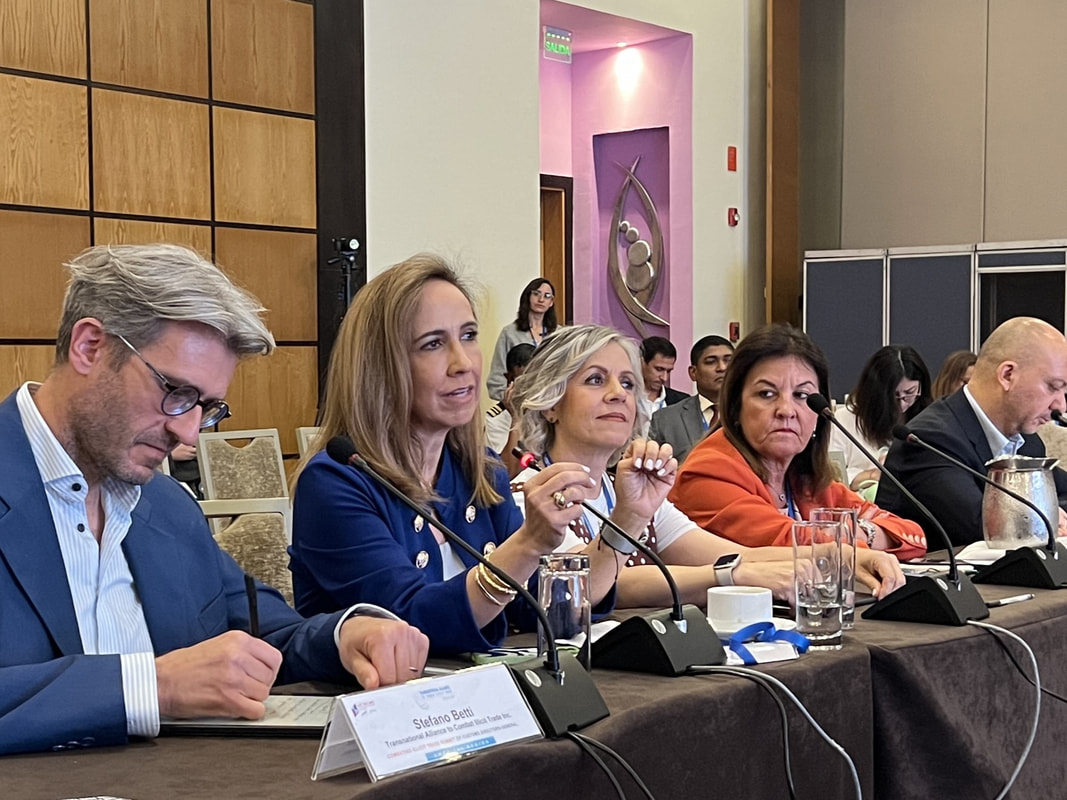
27 March 2024, Panama City - Today TRACIT presented findings from its latest report, the Ethanol Control Toolkit, which promotes the use of ethanol control programs as an effective measure to counter illicit trade in alcohol. During the Summit, Monica Ramirez, Global Director, Corporate Affairs at Anheuser-Busch InBev presented the report to 25 Customs Directors-General, urging them to legislate and enforce ethanol control measures to mitigate the production of illicit alcoholic beverages, disrupt illicit alcohol networks and protect public health.
​
Picture
Monica Ramirez, Global Director, Corporate Affairs, Anheuser-Busch InBev

TRACIT presents report to OECD Working Party on Countering Illicit Trade

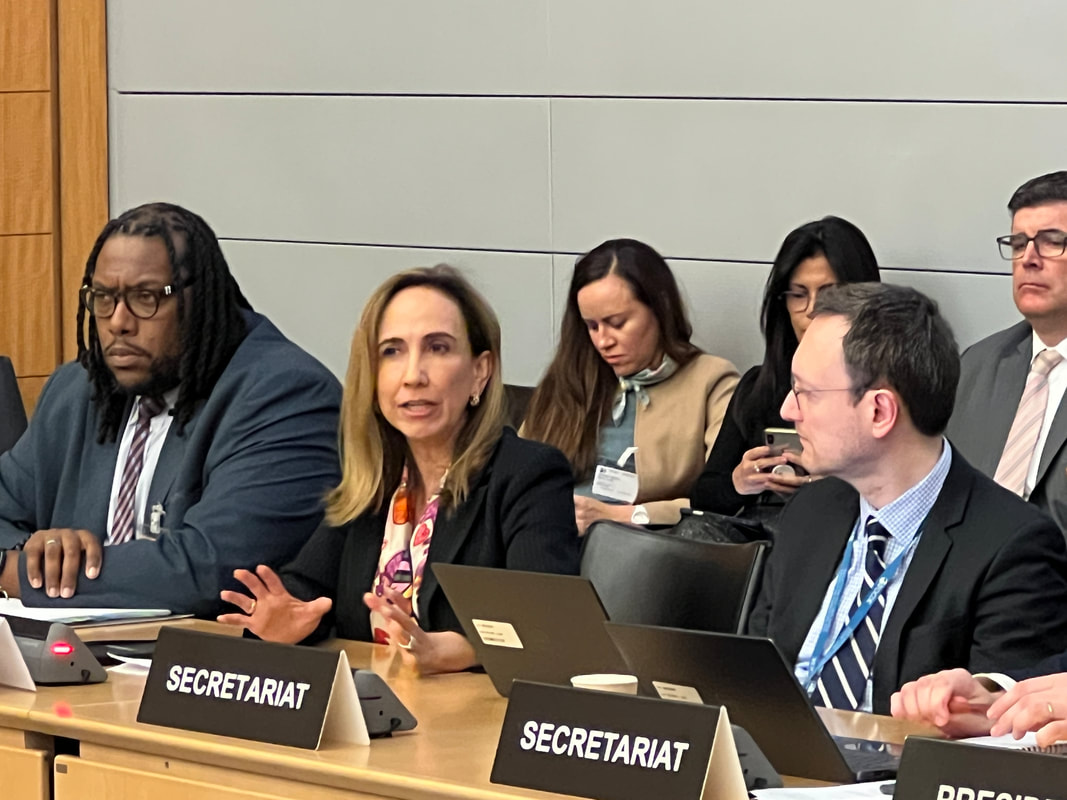
5 April 2024, Paris - During a session on securing supply chains from illicit trade, Monica Ramirez, Global Director, Corporate Affairs at Anheuser-Busch InBev, provided OECD delegates with an overview of TRACIT's Ethanol Control Toolkit.  She explained that the diversion of ethanol for illegal use in the alcoholic beverage sector can happen in developed and developing countries. She urged government officials to tighten controls on the ethanol supply chain and offered to brief national governments and intergovernmental agencies on how to implement the best practices delineated in the Toolkit. 
Picture
Monica Ramirez, Global Director, Corporate Affairs, Anheuser-Busch InBev

Download full report
Picture
About
Work Program
Contact
Terms of Use
Join Us

Transnational Alliance to Combat Illicit Trade (TRACIT) is an independent, non-governmental, not-for-profit organisation under US tax code 501(c)(6).
​
© COPYRIGHT 2025. ALL RIGHTS RESERVED.
Follow us
  • Home
  • About
    • Our team
    • Our member companies
    • Our corporate Alliance Partners
    • Our affiliations
    • Join
    • FAQs
  • Work Program
    • Country / Regional Focus >
      • ASEAN
      • Central Asia >
        • India
      • Dominican Republic
      • Laos
      • Panama
      • Pakistan
      • Philippines
      • South Africa
      • Trinidad and Tobago
      • Turkey
    • The Societal Costs of Illicit Trade >
      • Corruption and Illicit Trade >
        • Launch event | Money Talks: The Crooked Connection Between Corruption and Illicit Trade
      • The Human Cost of Illicit Trade
      • Link Between Illicit Trade and Sovereign Credit Ratings
      • Illicit Trade and the UNSDGs
    • Illicit Trade Index
    • Fraudulent Advertising Online
    • Illicit Trade Summit Americas
    • Small Parcels
    • Tackling the sale of illicit pesticides on e-commerce platforms
    • Ethanol Control Toolkit
    • Supply Chain Vulnerabilities to Illicit Trade
  • Sectors
    • Agri-food industry
    • Alcohol
    • Counterfeiting & Piracy
    • Cultural Property
    • Fisheries
    • Forced labor
    • Forestry
    • Pesticides
    • Petroleum
    • Pharmaceuticals
    • Precious metals and gemstones
    • Tobacco
    • Wildlife
  • Resources
    • Illegal Empire Campaign
    • TRACIT Talking Points
    • Videos
    • Events
    • News
    • Publications
  • Contact